When Therapy Prioritises Normalisation Over Wellbeing
For many Autistic adults, therapy is not only about managing anxiety or burnout—although these are common and significant experiences, it is also about repairing their relationship with themselves.
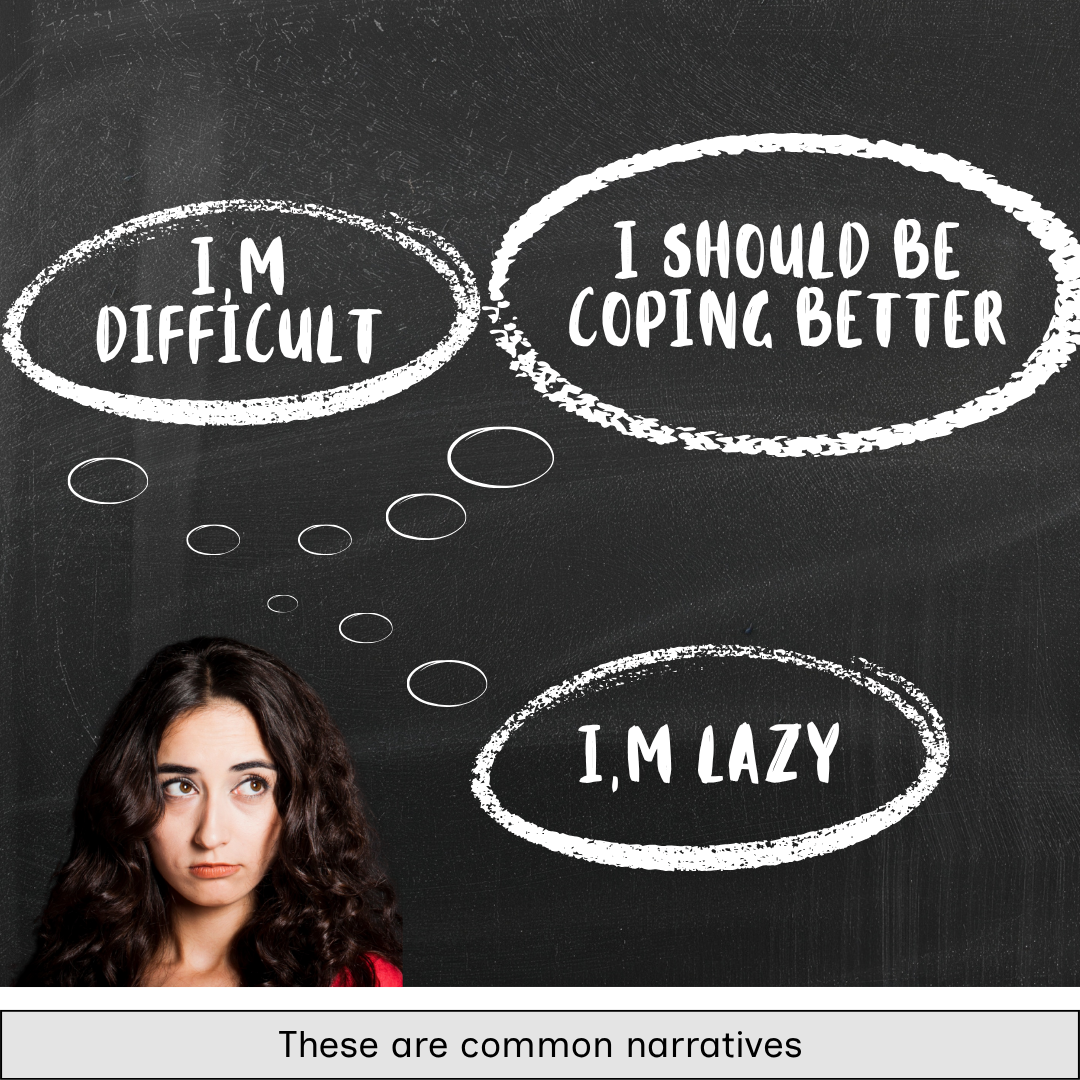
Late diagnosed Autistic adults often enter counselling carrying grief, confusion, and deeply internalised beliefs shaped by years of misunderstanding and misattunement.
These beliefs do not arise in isolation. They are typically the result of growing up in environments that interpret Autistic differences through a deficit lens, repeatedly locating the problem within the individual rather than within inaccessible systems or unmet needs (Lilley et al., 2022; Milton, 2012).
Without a neurodiversity affirming framework, therapy can unintentionally reinforce these narratives, particularly when goals are shaped by normalisation rather than by wellbeing.
When therapy prioritises normalisation over wellbeing
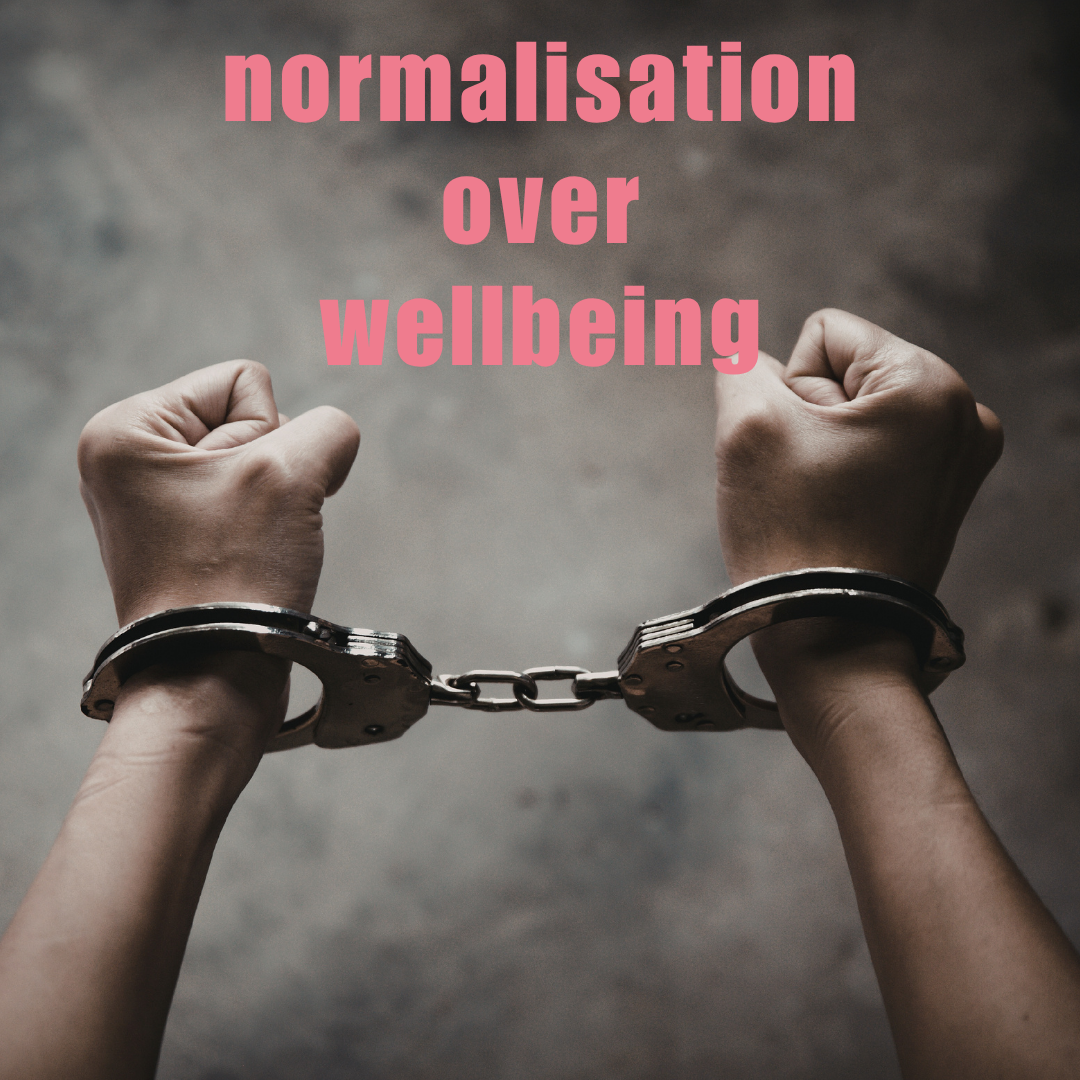
Non‑specialist counsellors may focus on goals such as:
Improving “appropriate” social responses
Reducing stimming
Increasing tolerance for distressing sensory or social environments
Learning to cope with systems that remain fundamentally inaccessible
While often well intentioned, these goals implicitly position Autistic traits as the problem to be fixed, rather than addressing harm, reducing environmental stressors, or supporting self-determination. Over time, this reinforces the idea that Autistic adults must adapt endlessly to systems that do not adapt to them.
The misconception of masking and ‘functioning’ as success
Autistic adults who:
Maintain employment
Speak fluently
Make eye contact
Appear socially competent
are frequently assumed to be “high functioning” ("High functioning" is an informal term used to describe autistic people who appear to manage daily life without obvious support needs.), and therefore not in need of specialised support. This assumption has serious consequences.
It:
Minimises internal distress
Ignores the cognitive, emotional, and physical cost of masking
Delays recognition of Autistic burnout
Leads to invalidation and self‑doubt
Many late diagnosed Autistic adults report being told they “don’t look Autistic”, a statement that often hinders help seeking and reinforces feelings of not being “Autistic enough” to deserve support (Price, 2022).
What specialised autism informed counselling does differently
Specialised counsellors understand that autism is heterogeneous, dynamic, and commonly intertwined with other neurodivergences, such as ADHD, OCD, and alexithymia. They are trained to work with frameworks that have implications for therapy, including:
Autistic burnout
Spiky profiles (uneven strengths and challenges)
Monotropism and interest‑based attention
Bottom‑up processing of emotion and sensory input
These concepts fundamentally alter how distress, capacity, and progress are understood in therapy (Murray et al., 2005; Price, 2022).
As a result, therapy goals can shift away from “functioning better” or “appearing more neurotypical,” and toward:
Supporting identity integration
Reducing internalised ableism
Building self advocacy and agency
Creating lives that do not require constant survival
Crucially, neurodiversity affirming counselling recognises that therapy should never aim to make someone less Autistic. Instead, it supports self-determination, authenticity, and sustainable wellbeing, on Autistic terms.
For many Autistic adults, this is the first time therapy becomes a space not for correction or endurance, but for recognition, repair, and self‑trust.
Let us commit to advocating for and providing neurodiversity affirming, specialised counselling that truly supports Autistic individuals. Seeking and demanding such approaches can transform not only therapy, but entire lives.

Interested in learning more? Join my 2-day workshop!
References
Lilley, R., Lawson, W., Hall, G., Mahony, J., Clapham, H., Heyworth, M., Arnold, S. R. C., Trollor, J. N., Yudell, M., & Pellicano, E. (2022). A way to be me: Autobiographical reflections of autistic adults diagnosed in mid-to-late adulthood. Autism, 26(6), 1395–1408. https://doi.org/10.1177/13623613211050694
Milton, D. E. M. (2012). On the ontological status of autism: The “double empathy problem”. Disability & Society, 27(6), 883–887. https://doi.org/10.1080/09687599.2012.710008
Murray, D., Lesser, M., & Lawson, W. (2005). Attention, monotropism and the diagnostic criteria for autism. Autism, 9(2), 139–156. https://doi.org/10.1177/1362361305051398
Price, D. (2022). Unmasking Autism: Discovering the New Faces of Neurodiversity. Harmony Books.