
Counselling Autistic Adults
From deficit to difference & beyond - Weekend Intensive

June 12-13, 2027

Curtin, ACT
“Jacqueline was an excellent facilitator: effortlessly and interestingly combining emerging research and lived experience, holding space for lived experience and allies in the group to share and providing a sensory friendly learning environment in which to learn”
- 2026 Intensive weekend workshop participant
Learn in an environment that adapts to your pace and individual needs
Engage in hands-on practice that deepens understanding and integrates theory into real skills
Receive immediate, personalised feedback from an experienced facilitator who adjusts as you go
Take part in richer, more dynamic group interactions that strengthen learning and insight
Build confidence through collaborative practice and shared learning that boosts engagement and motivation
What will you learn?
This weekend combines my four most popular workshops into a weekend intensive.
A neurodiversity affirming foundation for understanding Autistic adults
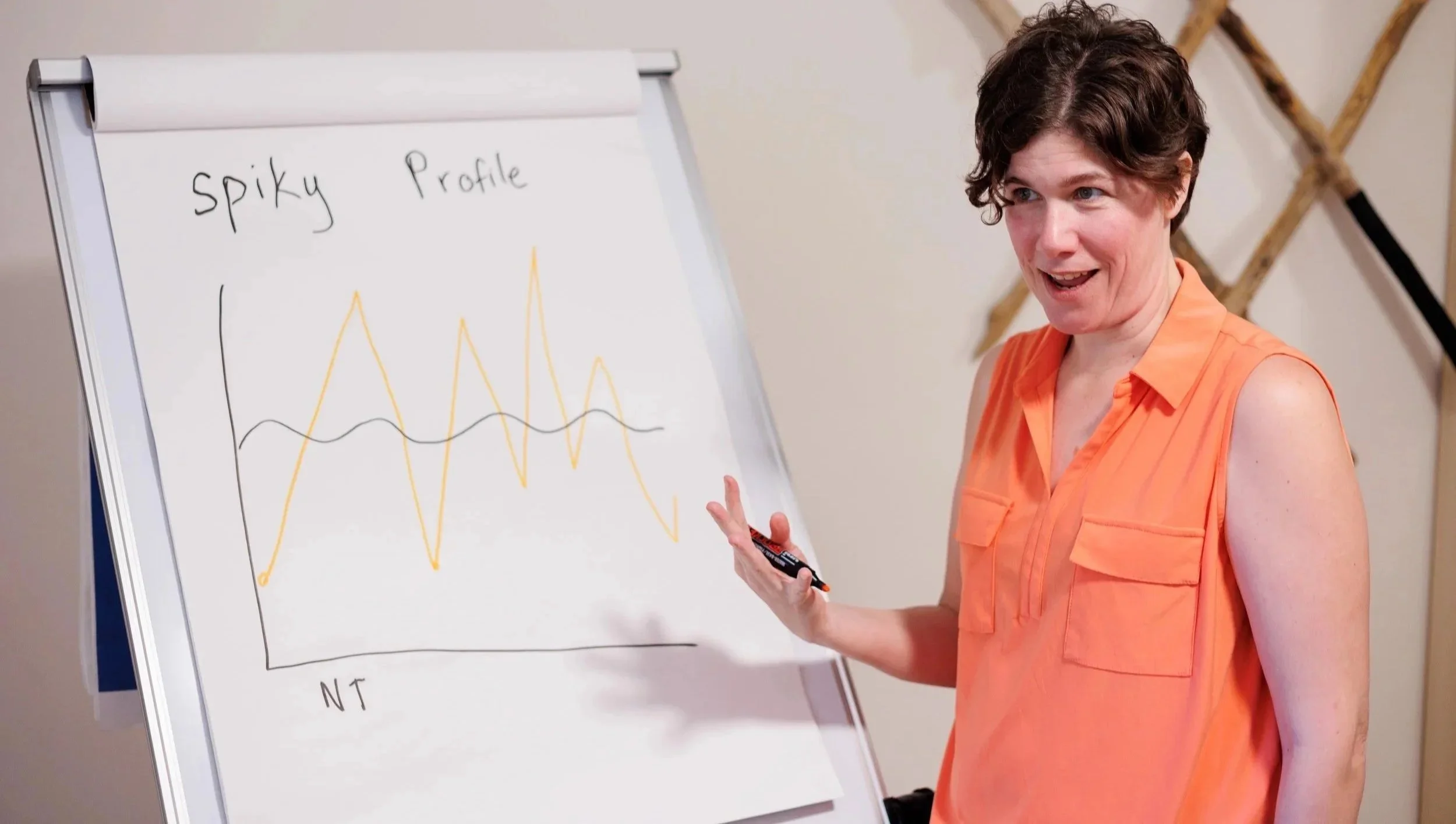
Across the series, you learn to move from a deficit model to a difference model, using Autistic‑led theories such as monotropism, bottom‑up processing, spiky profiles, and neural connectivity to understand Autistic experience in a respectful, non‑pathologising way. You also develop cultural competence, recognising autism as a form of culture with distinct communication and relational styles.
Autistic complexity: Co-neurodivergences, gender & sexuality
Expand your capacity to recognise and work with the real‑world complexity of Autistic clients, including ADHD, alexithymia, aphantasia, misophonia, and diverse gender and sexuality presentations. You also learn how these factors interact with therapy, communication, overwhelm, and safety.
How to adapt counselling practice to Autistic nervous systems
You learn practical, immediately usable tools such as flexible goal setting, scripting, exit planning, and adapting modalities to Autistic attention, processing, and sensory needs. You will also build skill in identifying client needs before therapy begins (e.g., intake adaptations, screening), supporting unmasking safely, and applying polyvagal theory in neurodiversity affirming ways.
Supporting Autistic adults through the diagnostic journey
You will be equipped to support adults before, during, and after diagnosis, including: recognising underdiagnosed groups, navigating pros and cons of diagnosis, guiding clients through grief, identity development, and connecting with neurokin, understanding and interrupting the burnout cycle, and supporting unmasking in a safe and sustainable way.
Working therapeutically with sensory differences
Understand Autistic sensory profiles, recognise sensory triggers and soothers, and integrate sensory‑based strategies into therapeutic work. You also learn to create sensory safe environments, tune into sensory characteristics of spaces, and use collaborative, neuroaffirming approaches to support regulation and safety.
This learning will be deeply experiential
You will have the opportunity to experience these things and have them modelled to you to help you implement theory to practice.
Topics are explored from a deep theoretical AND practical point of view, so you can immediately implement tools and strategies with your own clients.

Using lived experience narratives as teaching tools, and hands-on practice with extra resources to take away.

Monotropic friendly pacing throughout the weekend: single focus learning, gentle transitions and reduced task switching.

Culturally competent communication that will allow you to participate in a way that feels natural and safe to you.
Explore your sensory profile and safety strategies to mirror what you can offer clients later. The learning space has different seating options, sensory tools and adjustable lighting.

I’ll use language, pacing and choice points that reduce social performance pressure, so you can notice your own nervous system when neuronormativity isn’t centred.

“The hands-on activities gave me some self-reflection. I had the opportunity to know myself better.”
- 2026 Intensive weekend workshop participant
“The hands on activities were practical, accessible, interesting and well-timed throughout the weekend to ensure maximum engagement and I left the workshops feeling energised instead of draining, compared to other more content heavy or traditional workshops I've completed before.”
- 2026 Intensive weekend workshop participant
Your investment

Regular ticket
$800
Early bird
Book before 23rd May 2027 and only pay $650
Book before 25th April 2027 and only pay $525
SUPER Early bird

Bring a friend
Buy two tickets and only pay $1020 inc GST
What is included

Resource Pack
350+ page resource pack printed in colour, including:
Copies of the slides with space to take notes
Workbooks to record your experiences during activities
Additional resources you can use at home
A 60+ page diagnostic resource
A 80+ page glossary designed specifically for counsellors
An A4 folder so you keep your resources organised and keep them for future reference
All the stationery you will need for the workshop

Stationery to use and keep

Sensory tools
Sensory tools for you to try and take back to your own practice

2 × 1hr group supervision at 4 and 8 weeks post workshop to get ongoing support and supervision in counselling Autistic adults
2 hours of group supervision

Morning and afternoon tea
Lunch at a beautiful local cafe
Coffee/tea/soft drinks/juice
Snacks
Meals

Professional Development Certificate
Claim 10 points with ACA
Claim 13 hours of
Category A with PACFA
Some example resources


"The resources are fantastic, I can see myself exploring these for time to come still and know I am going to find them incredibly helpful for psychoeducation and supporting clients' communication of sensory differences, values, preferences and more."
- 2026 Intensive weekend workshop participant
“The resources were absolutely helpful for me, as they're like a one-stop shop, clearly structured.”
- 2026 Intensive weekend workshop participant
What people say about my workshops
Their learning journey
“I’m on the beginning journey, and I now understand what neurodiversity affirming practice looks like and how to implement this into my practice.”
- February 2026 - MR
“Being NT, I am finding the training very valuable in working with some of my clients. I loved the chapter on Autistic culture - one that needs to be understood (like any other culture) - and not fixed (lens of medical model)”
- February 2026 - Anon
“I have now attended all of Jacqueline's workshops, and I have retained all of the learning. I have embraced this learning to better understand myself and my clients. I have also shared the knowledge that I have learned in an autistic safe space with my clients so they too can understand themselves or their loved ones differently.” - September 2025 - WM
“I am noticing people differently, tuning into the sensory aspects of spaces.”
- September 2025 - EA
The presenter
“10/10 - Highly skilled and researched but also very relatable, authentic and honest with her approach.”
- February 2026 - BL
“Very adaptive to my needs and requests as a participant. Thank you for slowing down and explaining things to me when I suddenly fell behind. Usually, that is not something that is offered in a lecture/presentation/workshop, and it was super valuable to me that I had a chance to check in before we moved too far ahead.”
- November 2025 - BE
“Extremely knowledgeable and easy to listen to.”
- February 2026 - Anon
Their learning process
“[The hands on activities] were good and helped to illustrate your point and frame the learning.”
- February 2026 - DS
“Giving us practical exercises to work with Autistic Clients. I enjoyed the experiential part of bottom up, top down processing activity it really explained the theory/concept and helped me grasp the concept.”
- February 2026 - MR
“It was great not only getting examples and strategies but also being guided to do so through practice without a need to disclose or share unless comfortable.”
- February 2026 - BL
“It's one thing to hear how to do /deliver an exercise - and what to expect from it - but quite a different (and more valuable) thing to actually do it and experience it for yourself.”
- February 2026 - Anon
The resources
“I found the suggestions and approaches for using with clients in the workbook and guidance on language very helpful.”
- February 2026 - CC
“[The resources] were very informative and supported the workshop. I now have a reference to refer back to in my client work. The reframing language is so useful and I work very well with visual presentations. So the resources and the presentation were excellent.”
- February 2026 - MR
“They were comprehensive and descriptive and colourful, which I appreciated.”
- November 2026 - BE
Who is this training for?
This training has been designed with counsellors and psychotherapists in mind.
But anyone who regularly works with Autistic adults or uses counselling skills as part of their profession will benefit from this training.
Payment Plan
If you would like to set up a payment plan to pay for this training or pay via direct debit, please get in touch: training@ndats.com.au
Cancellation policy
If you cancel >60 days before the workshop: $150 admin fee applies.
If you cancel <60 days before the workshop: 50% course fee applies.