
2 day organisational training
from $250 p.p. (ex GST)
Why do you need this training?
Therapist often don’t know how to work with Autistic adults.
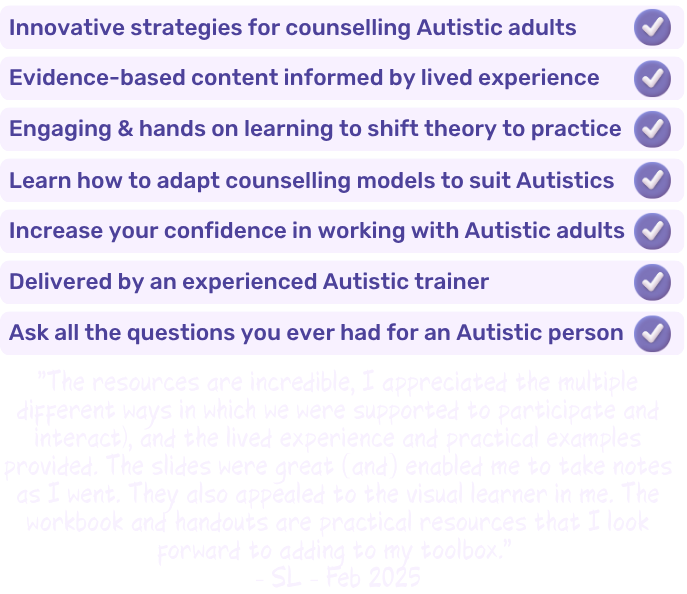
Use this specialised professional development to upskill your counsellors so you can provide safe & effective counselling services.
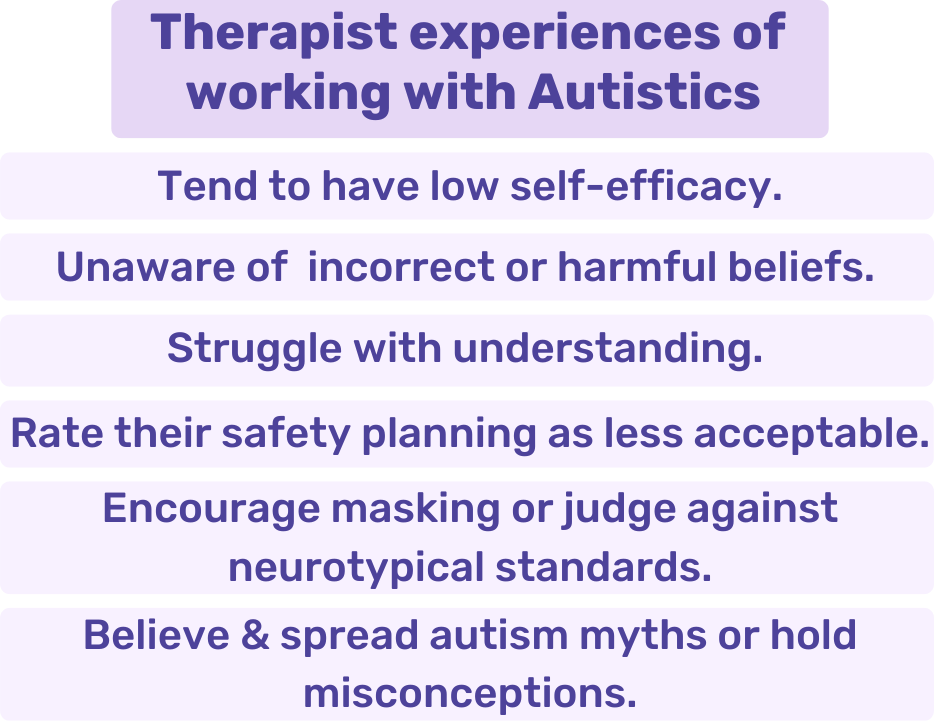
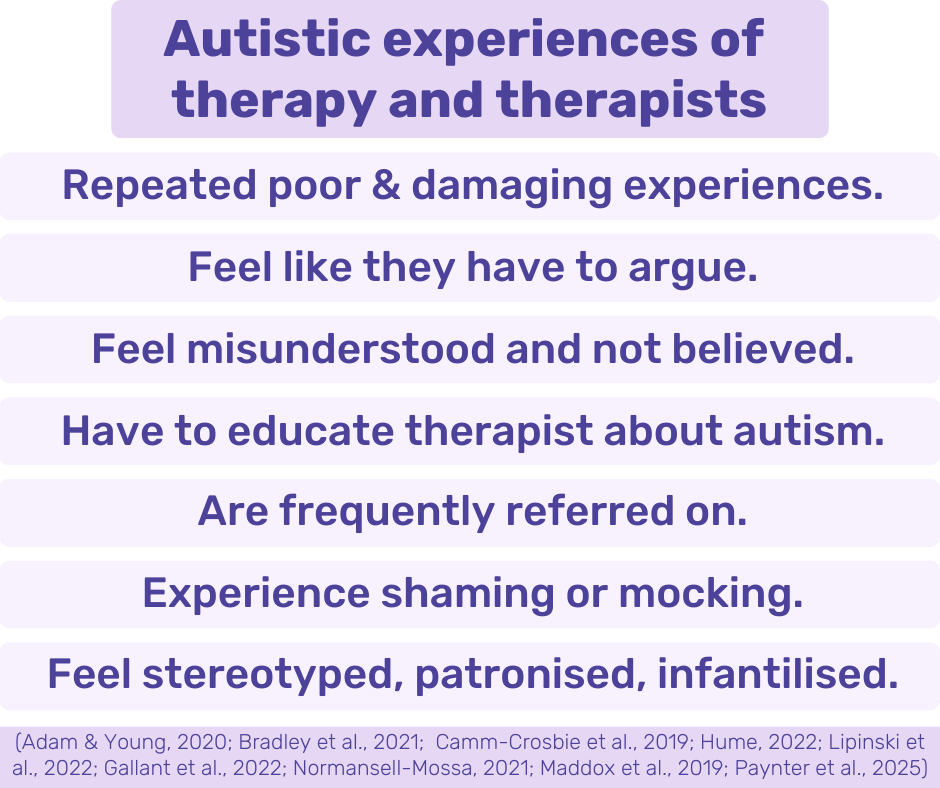
“The approaches we use, which are CBT based, may not be useful but as I have not been trained I don’t know.”
But when we know better, we can do better.
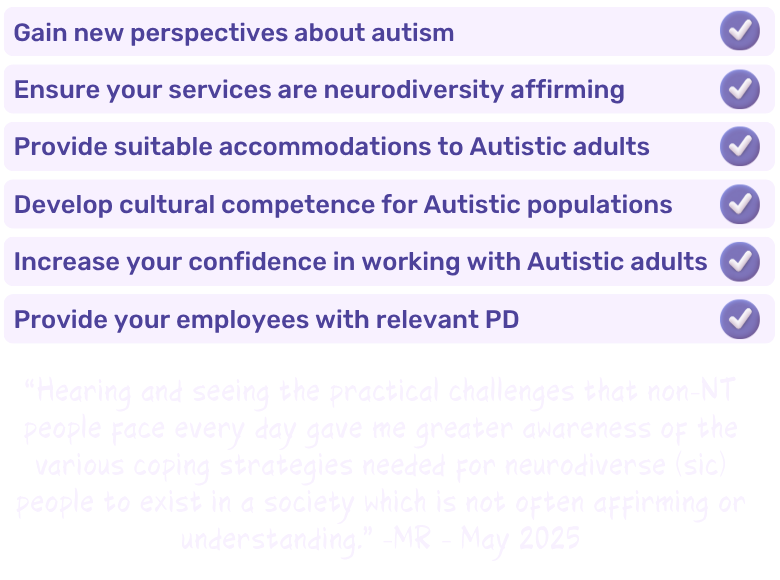
This training will help you and your counsellors to:
What will you learn?
Medical model vs neurodiversity affirming
Learn why and how to be neurodiversity affirming.
Affirming theories of autism
Neural wiring, monotropism, & bottom up processing.
Common co-neurodivergences
Find out about common co-neurodivergences, traits, gender and sexuality, and how this may impact on counselling.
Regulation strategies
Adapting polyvagal theory to Autistic people Cultural competence.
Cultural competence
Conceptualising autism as culture, Autistic communication, the double empathy problem and masking & unmasking.
Day 1
“Jacque is a wonderful facilitator - she speaks clearly and passionately.”
“The reflections deepened my knowledge and allowed me to think critically and analyse the topics presented.”
The statistics around diagnosis
Understand why autism and ADHD are not over-diagnosed
How to work with Autistic post-diagnosis
Learn what to expect and how to support Autistics post-diagnosis, including working through grief and other common responses.
How to support Autistic during diagnosis
Learn about common experiences and issues during the diagnositic process and how to support clients to safely obtain a diagnosis
How to work with Autistic pre-diagnosis
Learn why people seek a late-diagnosis, internal barriers to diagnosis are, the validity and purpose of self-diagnosis, and how to support people considering a diagnosis.
Shaping an Autistic life
Learn about post-diagnosis Autistic identity, including how to uncover Autistic needs and community. Identify the burn-out cycle with Autistic clients and work with this in a culturally compentent way.
Working therapeutically with sensory differences
Help clients develop their sensory profile and learn when and how you might utilise sensory strategies. Identify what barriers clients face in sensory unmasking and how you can support them in addressing these.
Support client’s sensory needs
Provide sensory accommodations to your clients and learn about different ways to support clients' sensory differences and needs inside and outside sessions.
Day 2
“The part that I found most valuable was the importance of understanding client’s sensory issues that result in emotional overwhelm. This workshop gave me a much deeper insight into the sensory issues [client’s] may be experiencing, that perhaps working on the communication and feelings of rejection are only one part, the other is that they are at a lower capacity to emotionally regulate due to their potential sensory triggers.”
About the training

Frequently asked questions
-
Send me an email or text and we can discuss this over email or phone. If you have preferred days/times, let me know and we will negotiate a date.
-
For a group of 20 people to attend a 2 day training the cost is $5000 +GST. (East coast capital cities)
If you have less than 20 people attending, let me know and I will adjust the price.
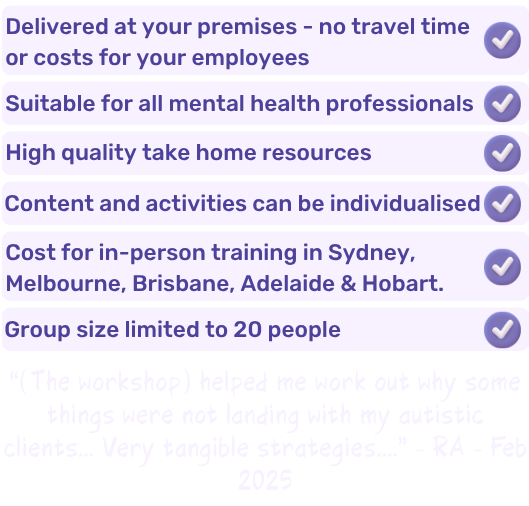
I limit my training to 20 participants. If you have more than 20 people wanting to attend let me know and I can offer discounted consequetive training days.
-
$6000 + GST for 20 participants.
If you have less than 20 participants let me know and I will adjust the price.
-
Yes! Get in touch and let me know your location. I am very passionate about delivering this training and will only charge extras if there are significant travel costs/times to get to you.
-
Please let me know what kind of services you provide or ow you work with Autistics. This training can be adapted to other types of services.
-
As my training does not teach counselling modalities, it is easily adapted, especially to those working with teenagers. For participants who work with teenagers, I incorporate more child development theory into the training.
I do not recommend this training with those working with children (younger than teens).
If you are unsure, let me know if you what your requirements are and we can discuss if I can meet your training needs.
-
Presentation of 2 day workshop
High quality resources, including slides, mask & sensory pack
Travel for speaker to your premises
-
These are not included, but I can organise them for you at an extra cost
Venue (like a training room)
AV (for slides)
Catering
Marked quiz & certificate of completion
or
Certificate of attendance (no quiz)
-
Any day of the week. Let me know if you have any preferences around what days you want to workshops to be done.
If you would like the workshop to be delivered outside of business hours there will be an 10% surcharge.
-
An average training day would look like:
9:00-10:45 - Session 1
10:45-11am - Break
11:00-12:45 - Session 2
12:45-13:30 - Break
13:30-15:15 - Session 3
15:15-15:30 - Break
15:30-17:00 - Session 4
This is just a guide. On the day I will be flexible to the training needs of the group.
I will arrive 45 minutes before the workshop starts to set up the room and slides. -
You can!
The 2 day workshop combines content from Counselling Autistic Adults 1 & 2 & 3 + the Sensory Workshop. And because it is in person we also take more time for group discussion and hands on activities.
Other benefits to in-person training include the team building that is involved in a shared training experience.
If you have more than 9 attendees it is actually more cost-effective to do in-person training.
-
Yes, you can. Let me know if you prefer the contact from day 1 or day 2.
EAST COAST CAPITAL CITIES
1 day training is $3000 + GST for 20 people.DARWIN/PERTH
1 day training is $4000 + GST for 20 people.If you have less than 20 people attending, let me know and I will adjust the price.
Get in touch
To discuss your training needs or get a quote for training please:
Email me at training@ndats.com.au
or
use the below contact form to receive a quote.
You will not be added to any mailing lists, but if you like you can connect with me through Facebook