Books & workbooks


This comprehensive, research informed guide supports Autistic adults navigating the diagnostic process and clinicians seeking to offer affirming assessments. Created by Jacqueline Gibb, an Autistic therapist, it translates DSM-5 criteria into lived experience, offering over 150 real world examples across social, sensory, and behavioural domains. The resource gently reframes diagnostic language from deficit based to difference-based, helping users identify traits without pathologising themselves.
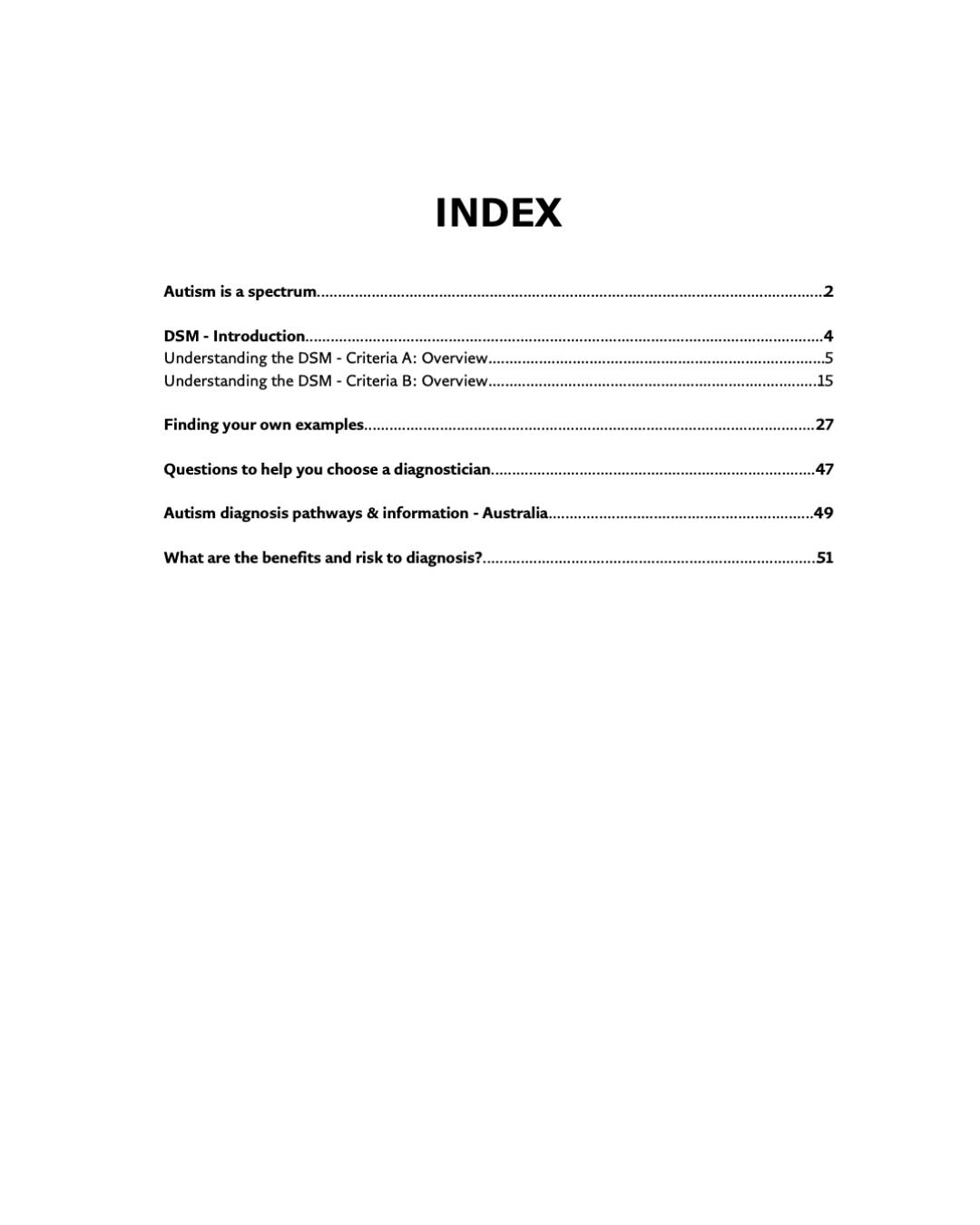
Structured around Criteria A and B, it includes reflective prompts to help users document their own experiences across life stages and contexts—essential for adult diagnosis. It also offers practical advice on choosing neurodiversity affirming clinicians, understanding assessment pathways in Australia, and weighing the risks and benefits of diagnosis.
Whether you're seeking clarity, preparing for assessment, or supporting others, this resource empowers you to approach diagnosis with self understanding and agency. It’s ideal for late-diagnosed adults, therapists, psychologists, and support workers committed to respectful, inclusive practice.
This resource is included in the on-demand workshop Counselling Autistic Adults - Part 3
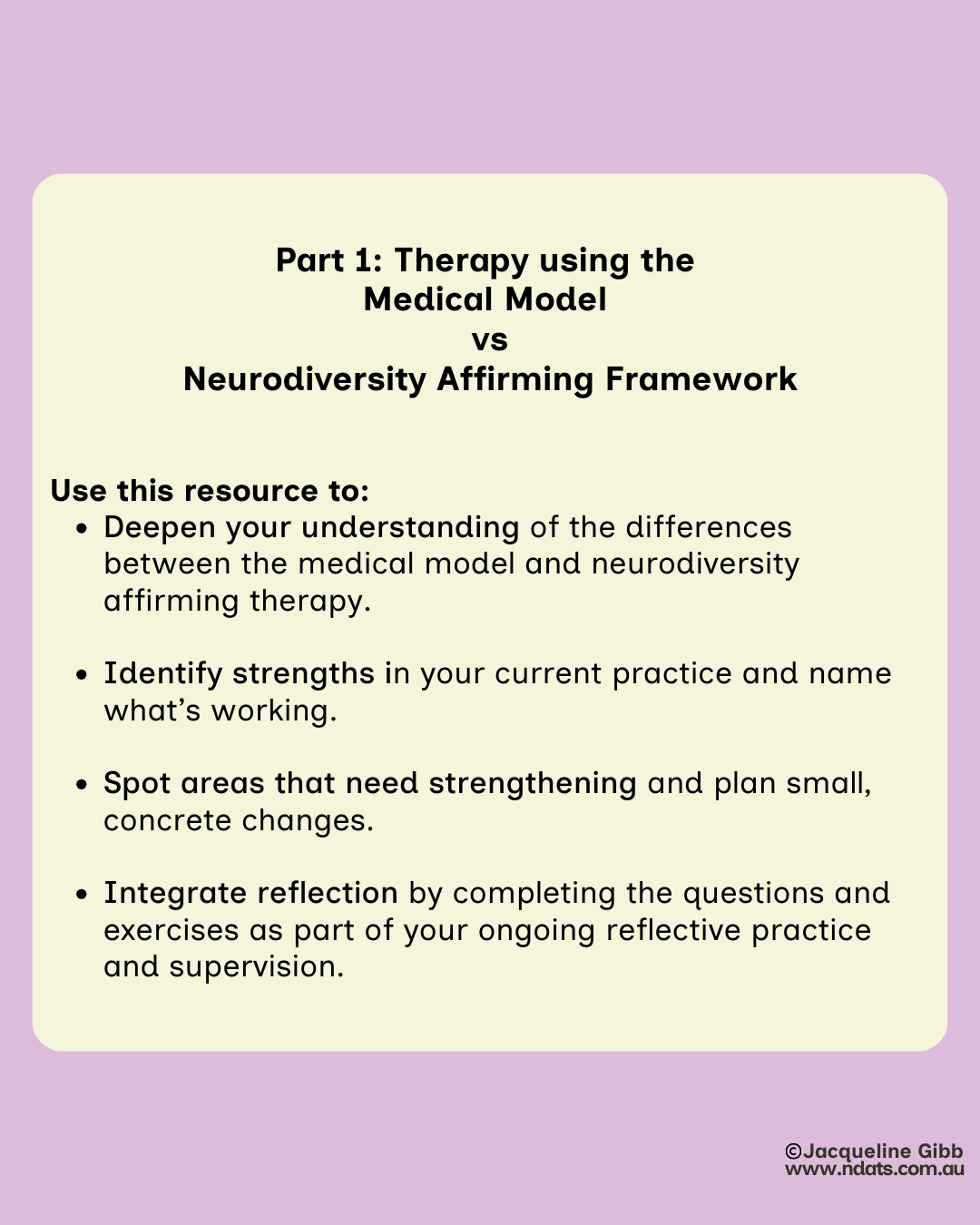
This therapist starter pack helps you move beyond the medical model and build neurodiversity affirming practice with Autistic adults.
It combines three practical resources:
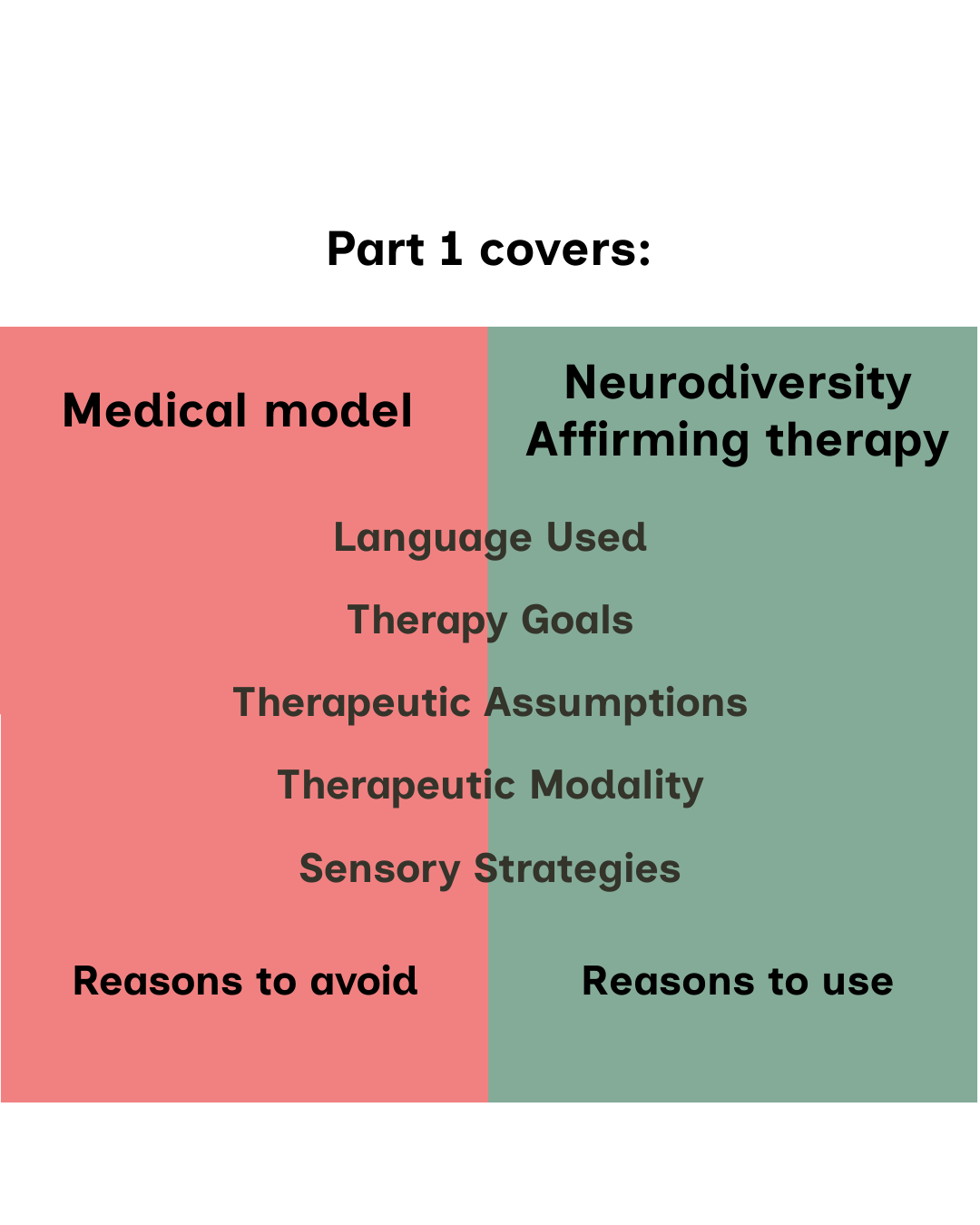
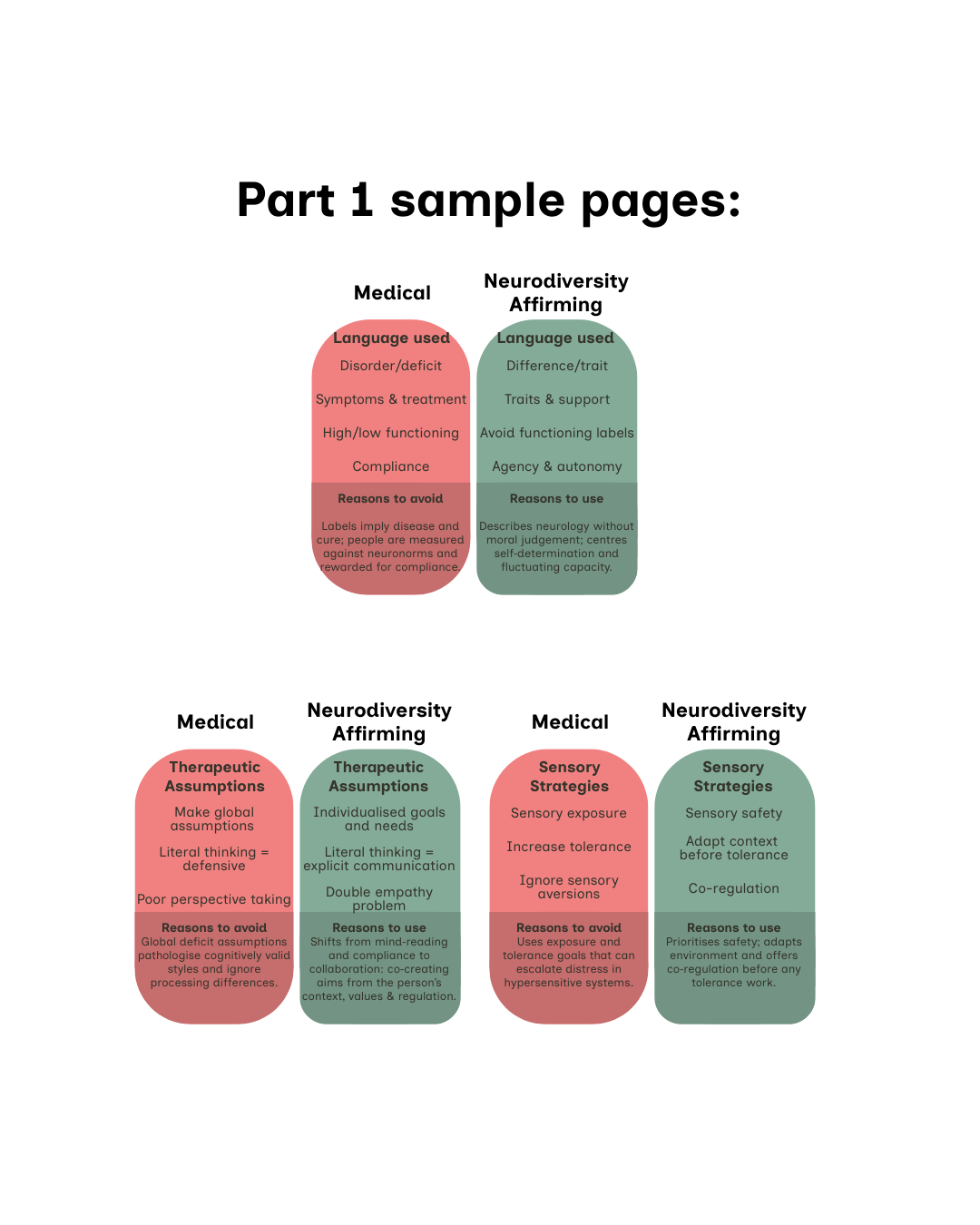
· Part 1 (Medical vs ND‑affirming therapy), which deepens your understanding of neurodiversity affirming therapy
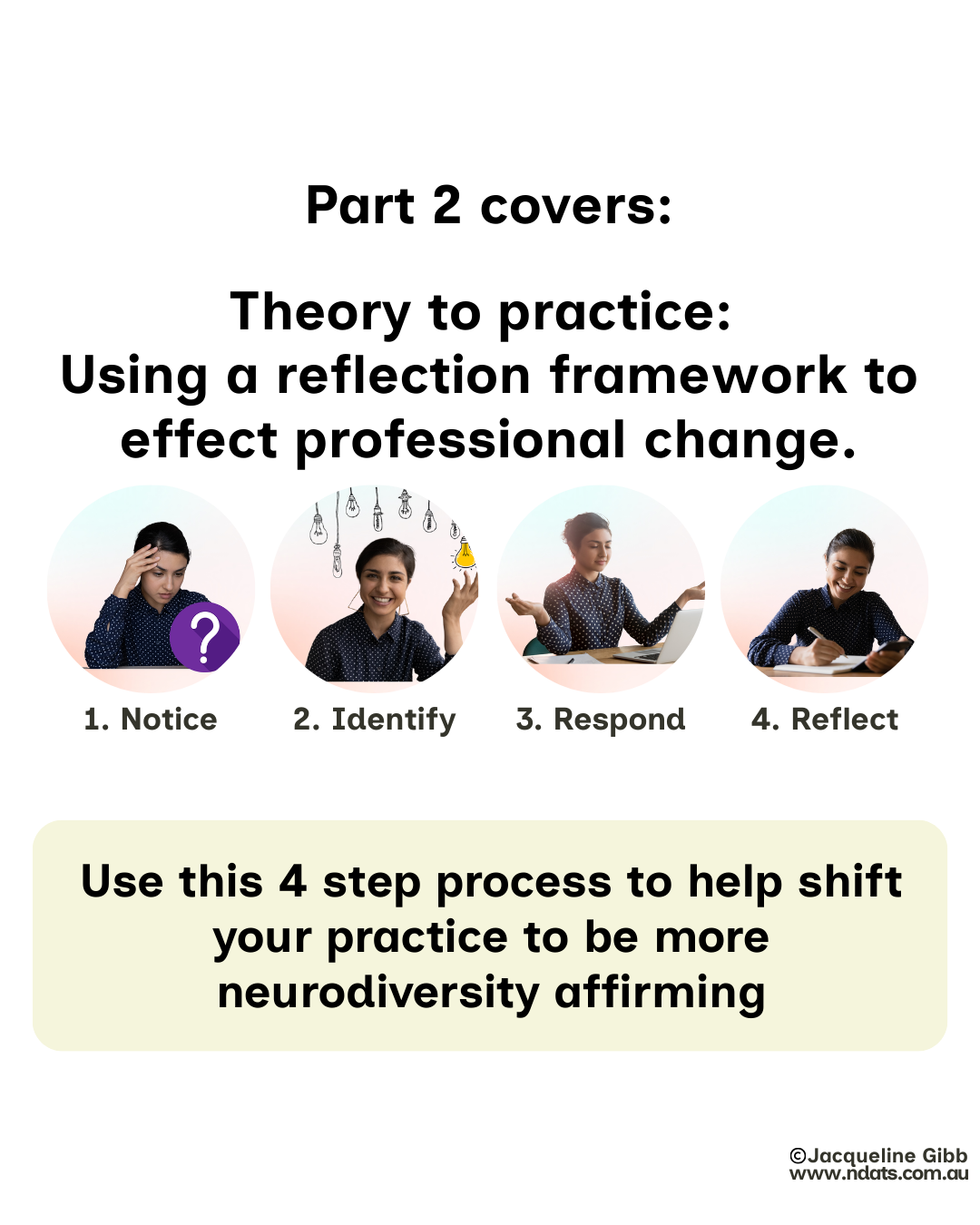
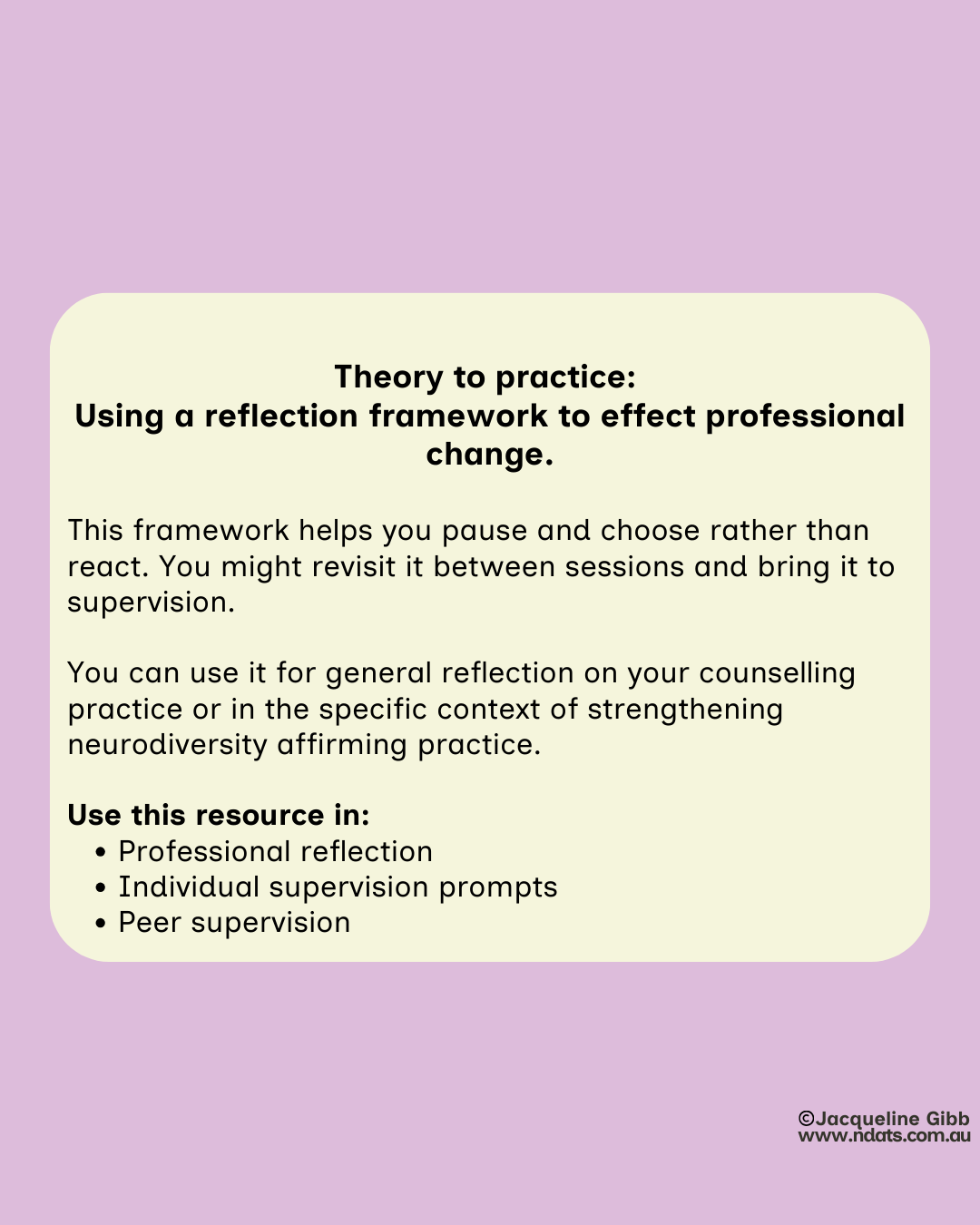
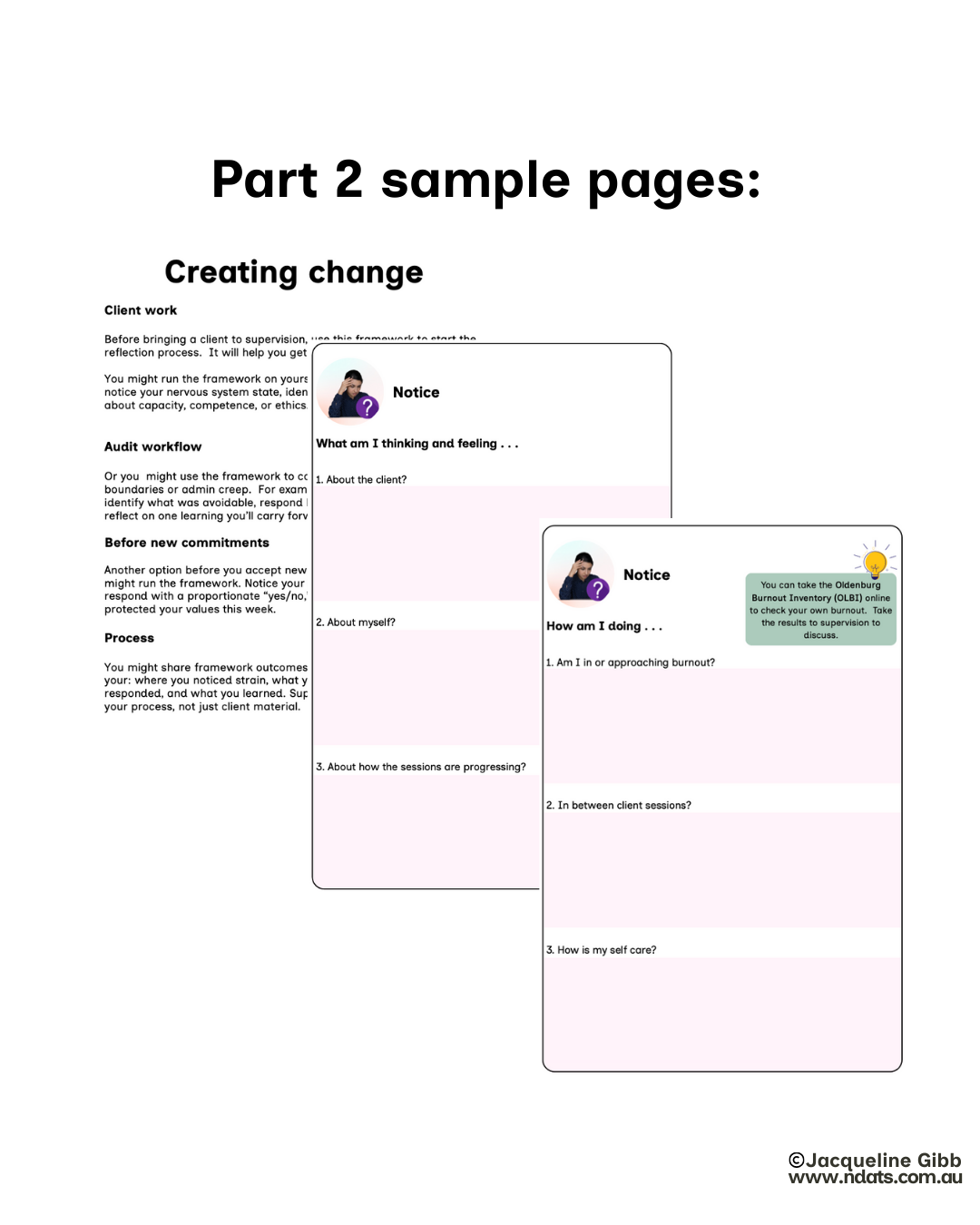
· Part 2 (Theory→practice reflection framework), which gives you a 4 step framework to effect change in your counselling practice
· Replacement Language Handout that standardises affirming wording across your notes, reports, and website.
What you will gain through this resource:
Clarity & confidence: A side-by-side contrast of the medical model and ND‑affirming therapy (language, goals, assumptions, modality), plus concrete actions you can implement today: intake questions, safety menus, and co-regulation routines.
A reflection framework that drives change: A four‑step framework—Notice · Identify · Respond · Reflect—to translate insight into practice, use in supervision, and audit boundaries, capacity, and ethical decisions.
Affirming language, standardised: A Replacement Language Handout that swaps deficit terms for descriptive ones (e.g., symptoms → traits; non‑verbal → non‑speaking; high/low functioning → contextual support needs) to protect autonomy and reduce masking pressure.
Harm‑reduction in the room: Sensory‑first strategies, pacing and processing tools, and a masking plan that validates survival strategies while prioritising safety and consent—change the conditions first, then consider personal change if desired.
Created to match the tone and depth you expect from NDATS resources, this pack gives you the scaffolds to pause and choose rather than react, and to evolve practice at a sustainable pace—session by session, week by week.