
 Image 1 of 7
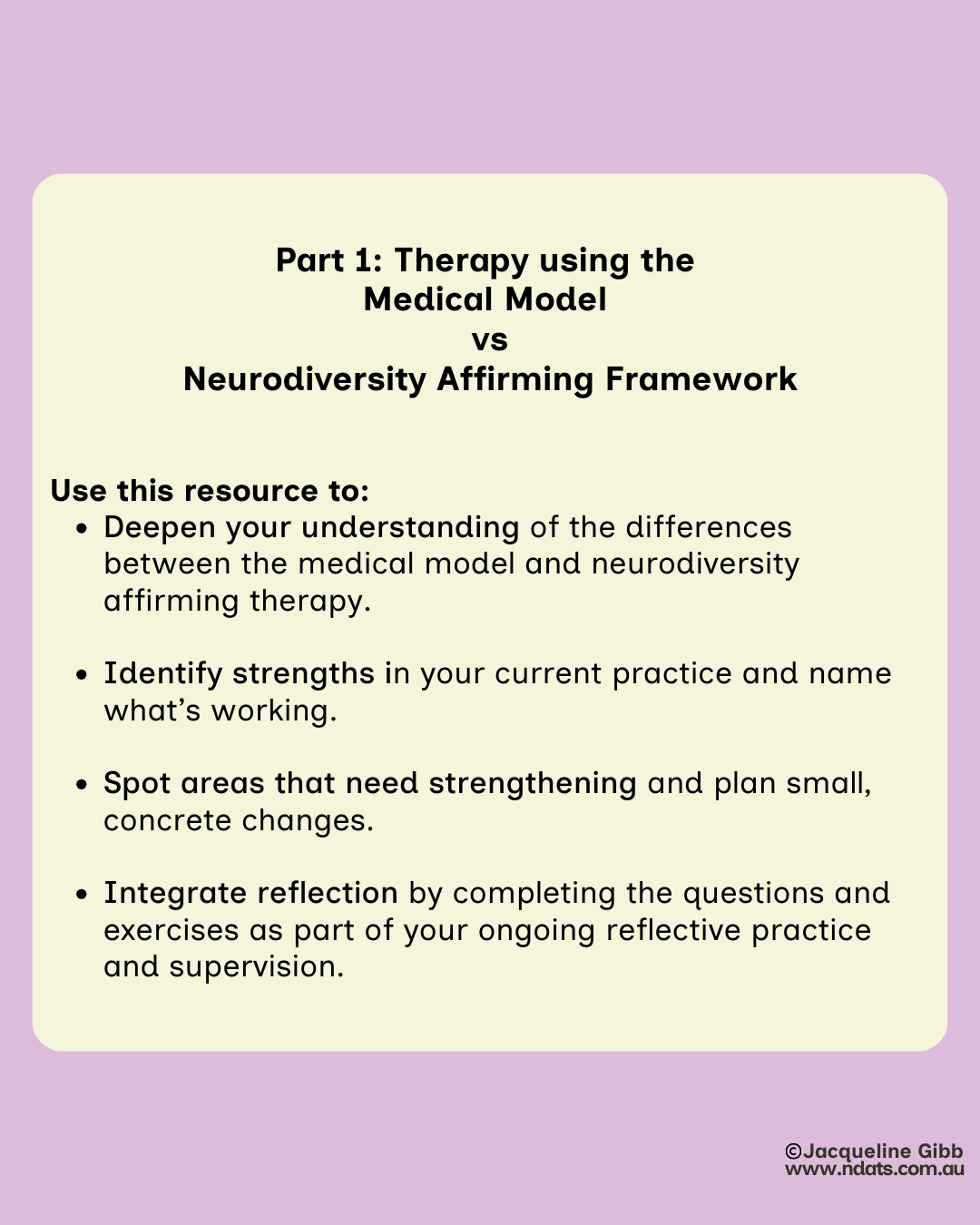 Image 2 of 7
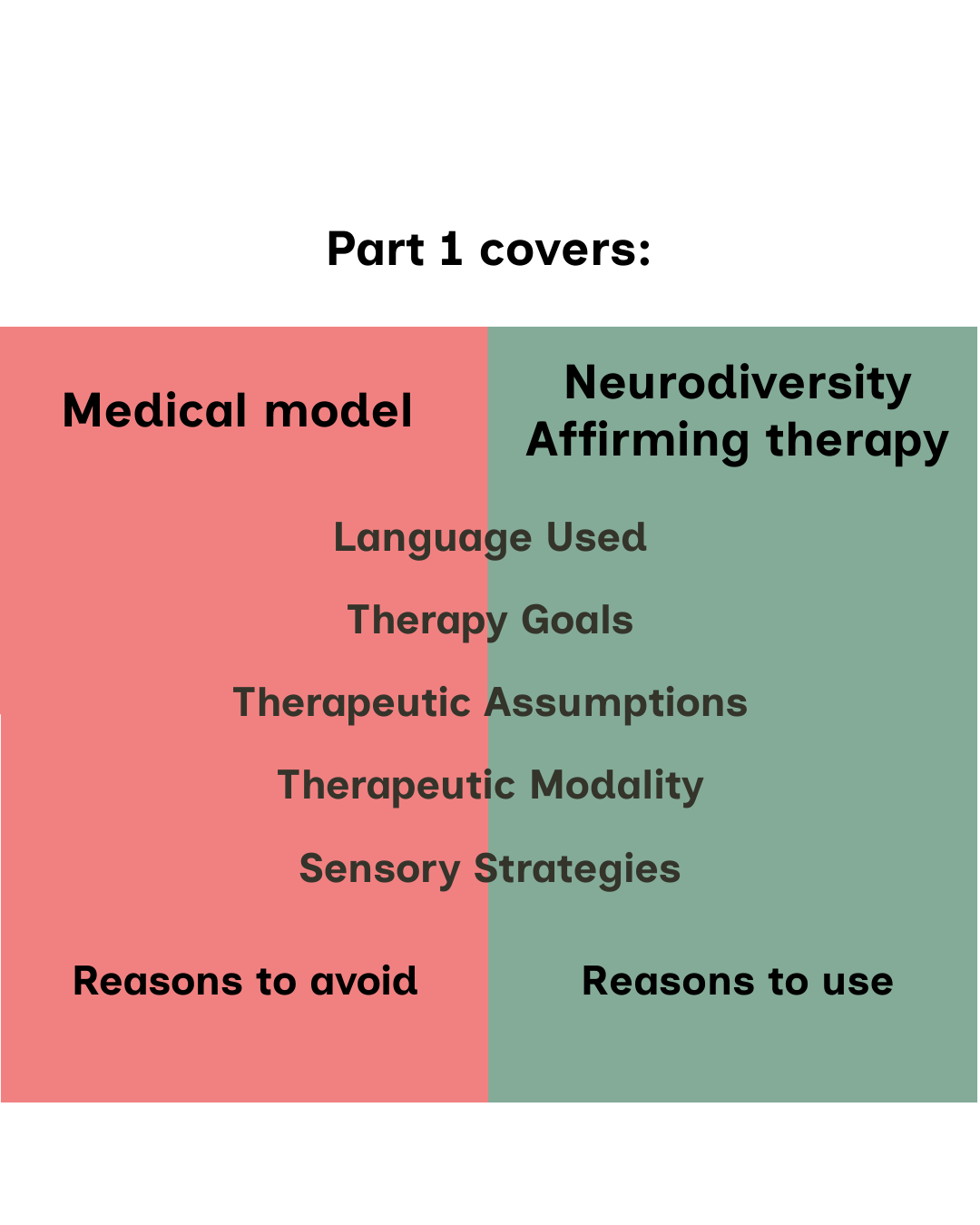 Image 3 of 7
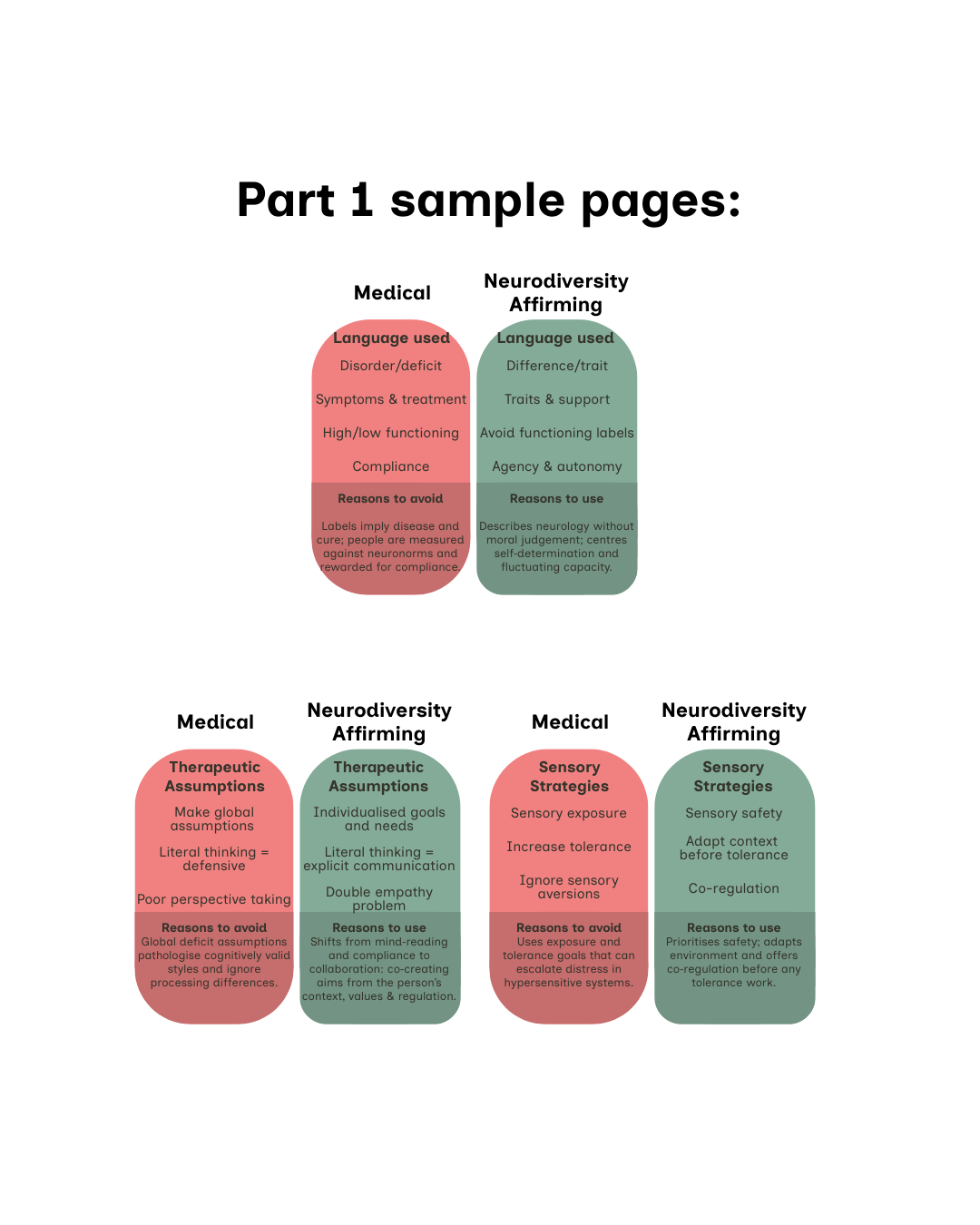 Image 4 of 7
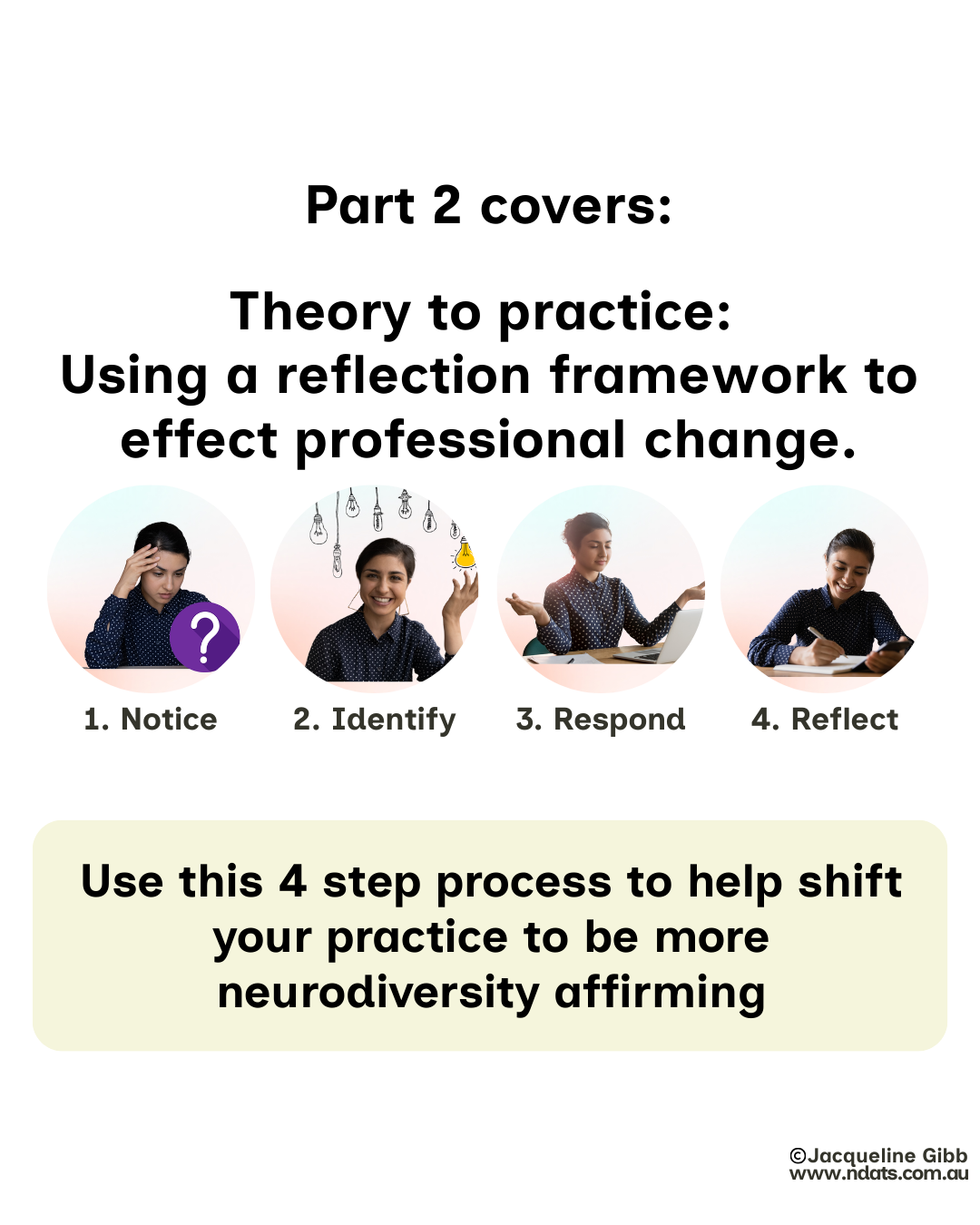 Image 5 of 7
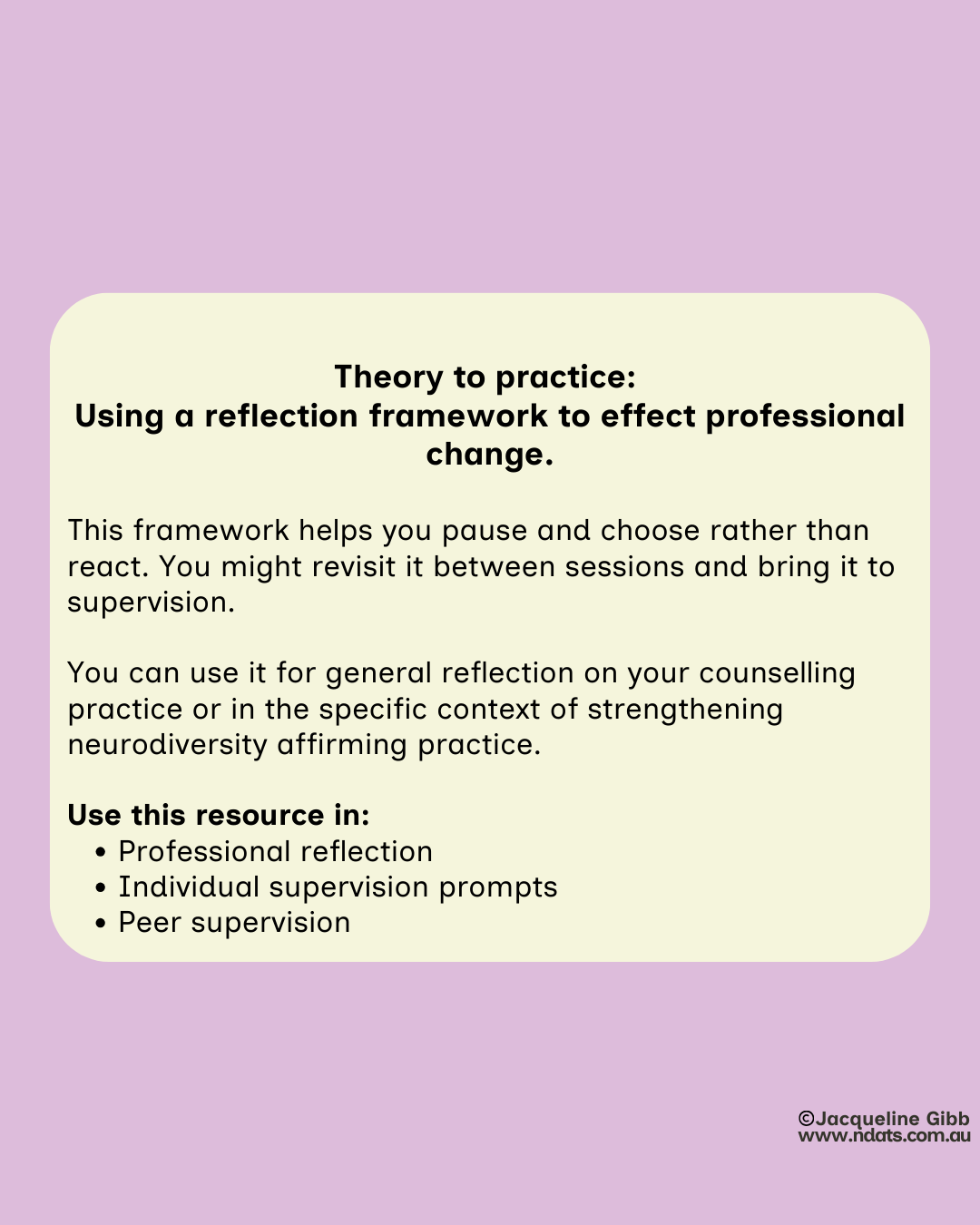 Image 6 of 7
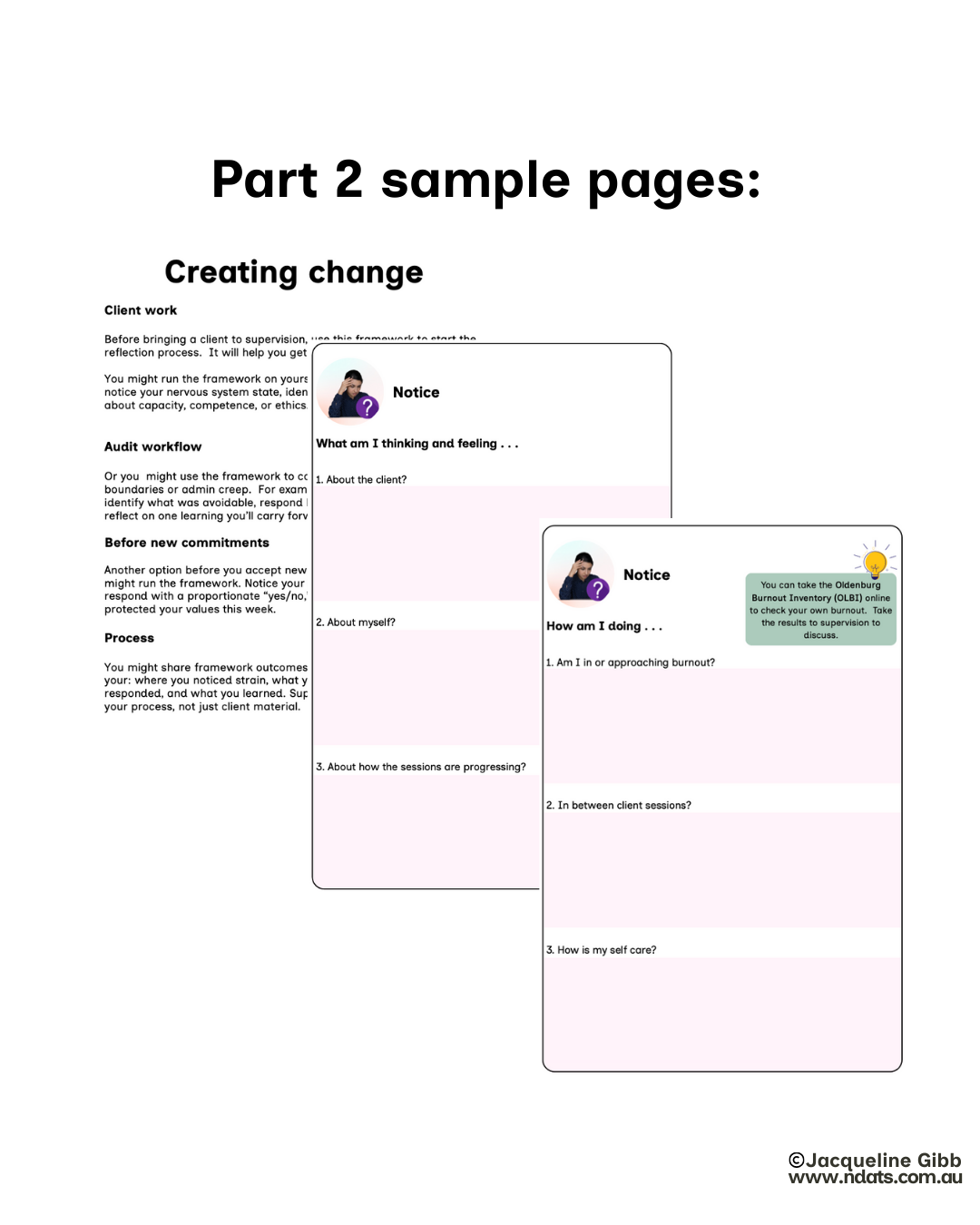 Image 7 of 7
What’s included
Part 1 (Editable PDF): Medical Model vs Neurodiversity‑Affirming Therapy. Side‑by‑side tables and guidance on language, therapy goals, therapeutic assumptions, modality, sensory strategies, and masking, with suggested actions (intake wording, meaning‑checks, safety menus). Ideal as a quick reference and team training primer.
Part 2 (Editable PDF): Theory to practice: Using a reflection framework to effect professional change. A structured loop—Notice · Identify · Respond · Reflect—with prompts you can bring to supervision, apply before new referrals, and use to monitor capacity, boundaries, and ethics.
Replacement Language Handout (PDF): A clear, printable wording guide that reframes common pathologising terms (e.g., ASD symptoms, suffers from autism, high/low functioning) into affirming, descriptive language grounded in lived experience and clarity. Use it across documentation, websites, and client materials.
Who it’s for
Counsellors, psychotherapists, psychologists, social workers, and support professionals working with Autistic adults—especially those late‑diagnosed or exploring identity and burnout—who want to reduce harm and increase therapeutic benefit without defaulting to compliance or normalisation.
How you might use it
Between sessions: set a one‑sentence intention; run a capacity check; adjust pace and sensory context.
In supervision: share outcomes (where you noticed strain, how you identified, what you responded with, what you learned) to make supervision a scaffold for your process—not just case content.
With your team: adopt the language handout to standardise wording; add intake prompts that ask, “What adjustments increase safety for your nervous system?”
Format
3 × PDFs (two editable/fillable workbooks + one printable handout). Immediate digital download.